
A Legacy of Faith and Partnership
GIVING THEN. GIVING NOW.
“One generation shall commend your works to another, and shall declare your mighty acts.” Psalm 145:4
At Any Cost
The story begins in late 1942. New Tribes Mission (now Ethnos360) sent its first team to Bolivia. They had heard of the Ayoré people — an isolated, nomadic people group who lived deep in the jungle and were considered extremely dangerous. Local residents repeatedly questioned and warned the missionaries:
“Why go out there and risk your lives? … They are not worth going out after.”
The team was not naive about the danger. But they were convinced that people who had never heard the gospel deserved the opportunity to hear it. One of the missionaries, Cecil Dye, explained their motivation:
“It is because the glorious name of Jesus is not known here, and must be made known at any cost …”
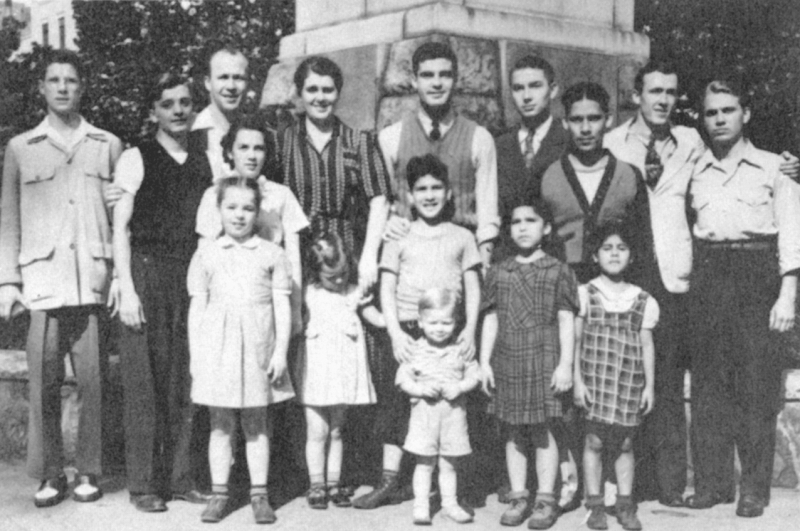
Ten adults and six children made up that first missionary team. Eventually, seven men set out to make contact with the Ayoré. After months of sickness, injuries and cutting trails through dense jungle, they reached an area where they expected to encounter them. Two men remained behind while five pressed forward carrying gifts and seeking peaceful contact.
Before they left, Cecil Dye expressed the heart of the group:
“I don’t believe we care so much whether this expedition is a failure so far as our lives are concerned, but we want God to get the most possible glory from everything that happens. I believe the real attitude of every fellow in this group is that they want, at any cost, that which will glorify God the most.”
A month later, no word had come.
Search parties found some belongings but no trace of the men. Years later, the story became known. The five missionaries had reached an Ayoré camp but were killed during the encounter.
Yet that was not the end of the story.
What makes the story remarkable is what happened afterward.
Over the following years, missionaries continued pursuing peaceful contact. Eventually relationships were established, the language was learned, Scripture was taught and many Ayoré people, including relatives of those involved in the killings, became believers. Today, believers from among the Ayoré are helping establish other thriving churches.
The five men were not the end of the story. They were the beginning.
Preparing Workers for the Task
While these events were unfolding, another story was beginning.
In the earliest issues of a New Tribes Mission publication, called Brown Gold, created to share news from mission fields, readers learned of an ambitious plan to create a place where missionary candidates could be prepared for the difficult work of taking the gospel where it had never been heard. Few could have imagined that their investment would help launch generations of church planters around the world.
“We plan to start a short preparatory course for those going out under New Tribes Mission. … We are pioneering with the gospel, and we must know our job and be prepared to meet it.”
The founders understood that thriving churches do not happen by accident. Workers must be prepared.
Supporters Gave
A former nightclub became the first missionary training center. Forty students attended that first year.
As the mission grew, leaders continually adapted the training environments to prepare workers better for the intense work of pioneering missions.
Training moved from downtown Chicago to the rugged setting of Fouts Springs, California.
A former boys’ camp in Missouri was transformed to continue training workers in linguistics, Bible translation and church planting.
In the early 2000’s construction began to consolidate multiple training centers into a single campus at the Missouri location, the entire campus designed to prepare workers for ministry among the unreached.
The location changed, but the need remained the same.
The gospel would not reach unreached peoples without trained workers.
From Church Planter to Trainer
Twenty-five years ago, the Holmquist family arrived among an unreached people group living deep in the jungle. Reaching the village required a 20-minute flight in a small Cessna plane followed by an 8- to 10-hour journey by dugout canoe. The village sat at the foothills of the mountains, surrounded by jungle as far as the eye could see.
When they moved into the village they had two young children, just 1 and 2 years old. The heat and humidity were thick and stifling. The language and culture were completely foreign. There were no stores. Many of the people had never even traveled to town.
“We were young and naive,” they reflected, “but we saw God clearly leading us to work among this people group.”
They also recognized how critical their training had been.
“Without training from older missionaries who had been there and done that, it would have been overwhelming to even know how to begin.”
Over the years, they learned the language, developed an alphabet, created literacy materials, translated Scripture and taught God’s Word. By God’s grace, people came to faith. Leaders were established, and believers were equipped to reach neighboring villages.
Today, three churches exist within that language group. The New Testament has been translated, and people are reading God’s Word in their own language.
The Holmquists no longer live in the village full-time. They return regularly to encourage and assist the church they helped establish, and many times they leave encouraged themselves.
Now serving as trainers at the Ethnos360 Training Center, they are helping prepare the next generation of church planters.
“It is a joy to share from our experiences and from God’s Word what it takes to see an unreached people group reached with the gospel.”
They continually remind students that church planting is a long-term commitment. Just as any profession requires training and preparation, so does church planting. Through principle-based training, students are equipped for every stage of the process — from first contact to a mature, thriving church.
The Legacy Continues
More than 80 years after those first partners responded to the need, workers are still being trained and sent to the unreached peoples of the world. The believers who gave to establish the first training centers could not have imagined the generations of church planters who would follow. Yet their faithfulness helped make it possible.
That same legacy of faith and partnership continues through you — preparing people to carry the good news where it has not yet gone.
Eighty years ago, partners invested in preparing workers for a task that would outlive them. Those investments helped send people who carried the gospel into places where Christ was not previously known.
Your partnership in the Renovate to Reach campaign continues that same legacy — preparing the next generation of workers for the unfinished task.
Because of your support, the ongoing projects to expand training capacity are well on their way. At the Ethnos360 Bible Institute, where a biblical foundation is laid for life and ministry, just over 58% of the need has been met. In Missouri, the Ethnos360 Training Center, where essential skills, methodology and tools necessary for planting a thriving church are taught, the project still needs approximately 74% to complete the necessary renovations.
Each classroom and housing unit exists for one purpose: to prepare workers who will carry the gospel to the unreached.
The mission remains unfinished.
Your partnership in the Renovate to Reach campaign ensures that the next generation of workers is prepared to take that message where it has never gone.